

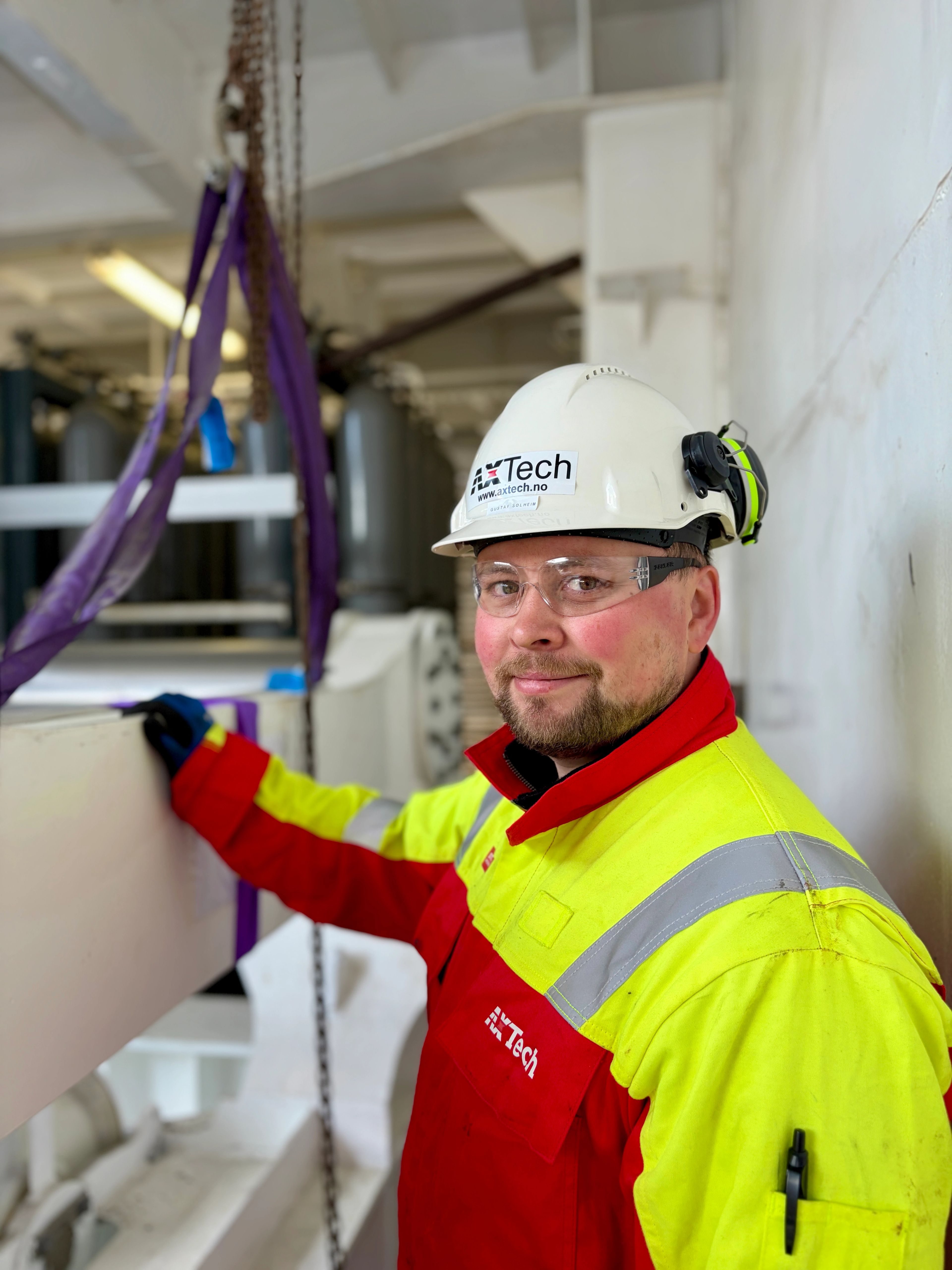
Gustav – Following a Project from design to offshore
Four months after joining AXTech, Gustav was leading the electrical discipline on a major upgrade of one of our module handling systems.
Originally delivered by AXTech in 2008, the system is now being upgraded from a 35-tonne to a 60-tonne lifting capacity. For Gustav, it's the first project he's followed from the initial engineering phase all the way to offshore commissioning.
It also became an opportunity to take responsibility much earlier than he expected.
Trusted with responsibility early
Taking on the role of electrical discipline lead only a few months after joining AXTech was a challenge Gustav was ready for.
The most exciting part has been following the project from the very beginning. I know this system inside out, which gives me confidence when I'm on board during testing. I know why the solutions were chosen, and I can answer the questions that come up.
Engineering is a team effort
Although Gustav has been responsible for the electrical discipline throughout the project, he is clear that the result is the product of a much larger team effort. Working closely with experienced colleagues across disciplines has been an important part of the project, and the support and knowledge shared along the way have helped him grow in the role. At AXTech, successful deliveries are built through collaboration, with each team member contributing their expertise towards a common goal.
Learning by doing
For Gustav, this project has also been his first opportunity to see an AXTech delivery through its final stages. Following the project from engineering and design to offshore testing has given him a much deeper understanding of both the technology and how it performs in operation. Seeing months of engineering work come together in a real-world environment has been a valuable learning experience.
Solving real engineering challenges
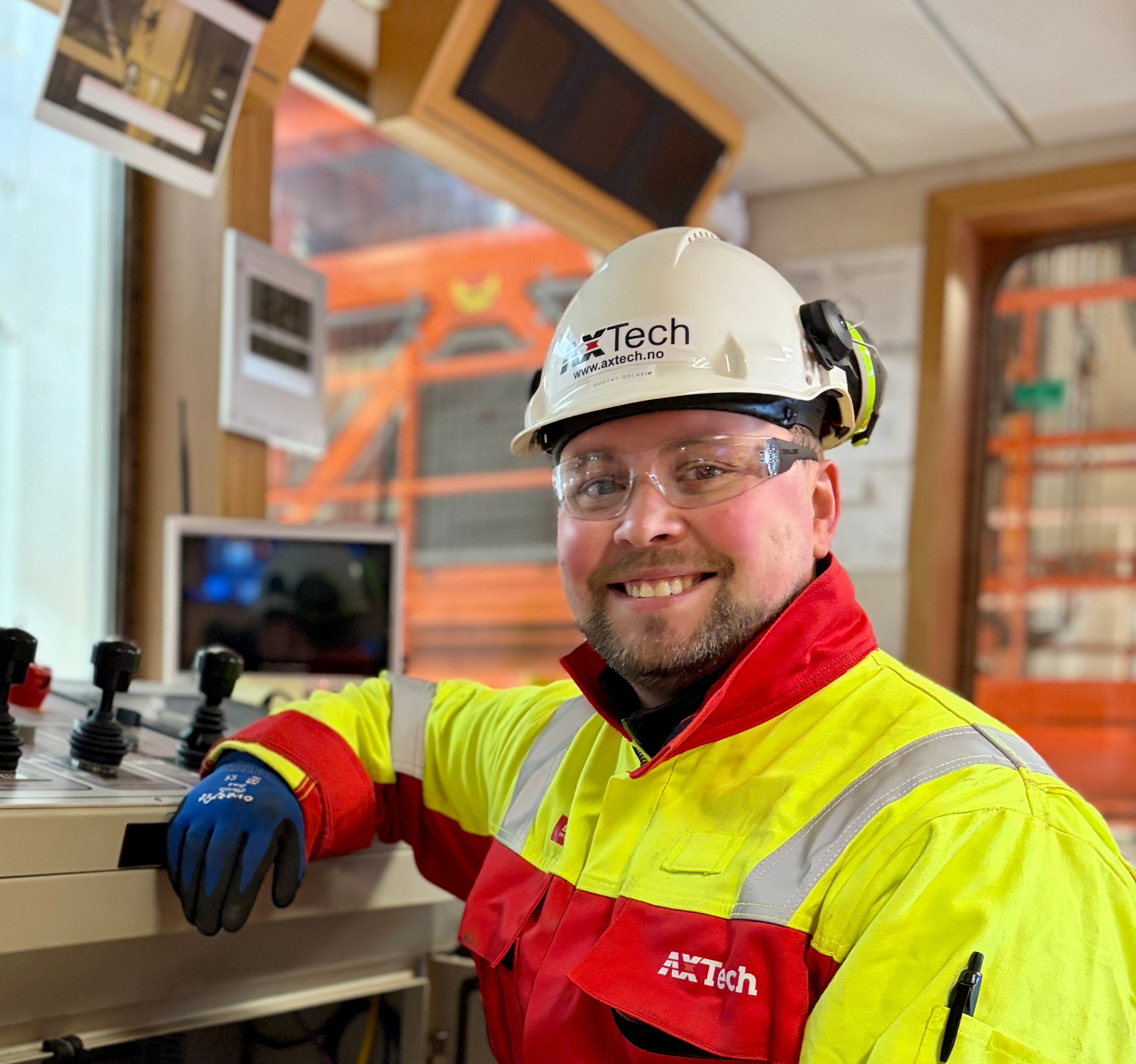
One of the project's objectives was to reuse as much of the existing equipment as possible. Gustav and the team carefully assessed which components could be retained, ultimately reusing around 10% of the original system, a solution that made sense both technically and economically. As he now prepares to join the vessel for commissioning, he'll see months of engineering work put into operation.
"Following a project from the first engineering drawings to offshore commissioning has been a great experience. Seeing the system in operation makes all the work worthwhile."